น้ำกับสิ่งมีชีวิต Water and Life
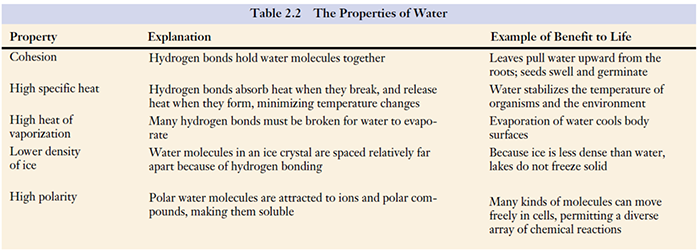
แรงยึดเหนี่ยวระหว่างโมเลกุลของน้ำ
Cohesion of Water Molecules
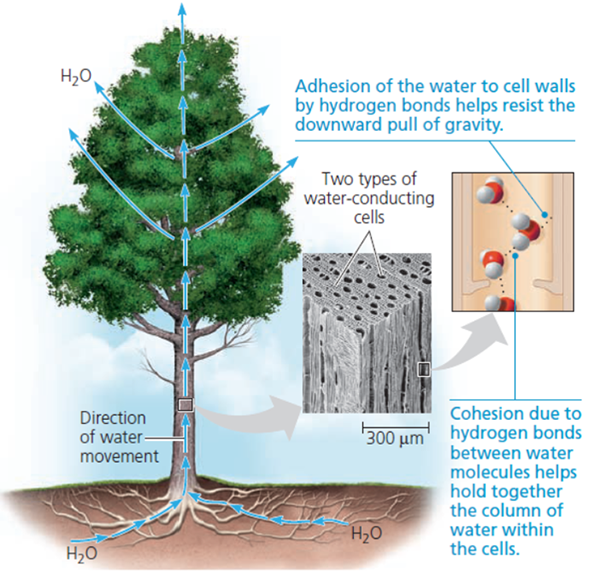
รูปที่ 3.3 การลำเลียงน้ำในพืช: การระเหยของน้ำจากใบไม้จะดึงน้ำจากรากขึ้นผ่านเซลล์ที่ลำเลียงน้ำ เนื่องจากคุณสมบัติของแรงยึดเหนี่ยวระหว่างโมเลกุล ทำให้ต้นไม้ที่สูงที่สุดสามารถลำเลียงน้ำขึ้นได้มากกว่า 100 เมตร ซึ่งเทียบเท่ากับประมาณหนึ่งในสี่ของความสูงของตึกเอมไพร์สเตทในนิวยอร์ก
Figure 3.3 Water transport in plants . Evaporation from leaves pulls water upward from the roots through water-conducting cells. Because of the properties of cohesion, the tallest trees can transport water more than 100 m upward-approximately one-quarter the height of the Empire State Building in New York City. . Evaporation from leaves pulls water upward from the roots through water-conducting cells. Because of the properties of cohesion, the tallest trees can transport water more than 100 m upward-approximately one-quarter the height of the Empire State Building in New York City.
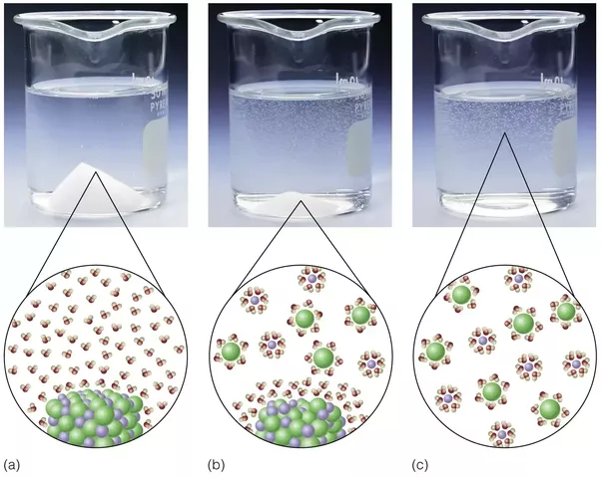
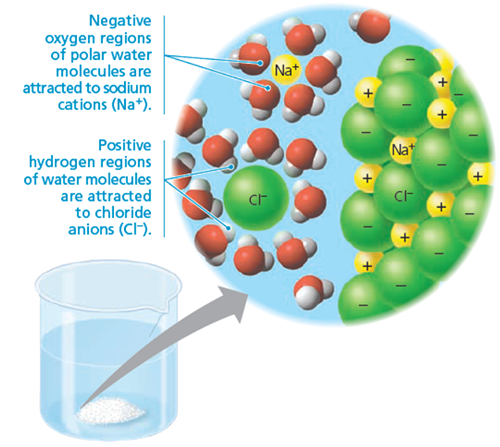
รูปที่ 3.7 การละลายของเกลือแกงในน้ำ: โมเลกุลของน้ำจะล้อมรอบไอออนของสารละลาย เรียกว่า "เปลือกไฮเดรชัน" (hydration shell)
Figure 3.7 Table salt dissolving in water. A sphere of water molecules, called a hydration shell, surrounds each solute ion.
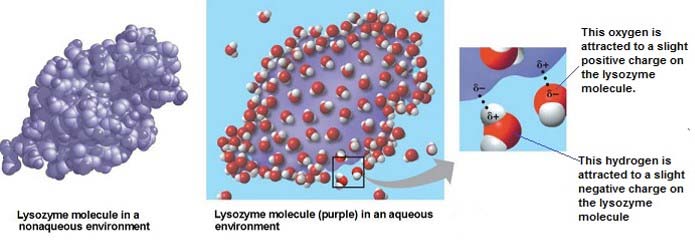
ไลโซไซม์เป็นโปรตีนชนิดหนึ่ง พบได้ในน้ำตาและน้ำลาย มีฤทธิ์ต่อต้านแบคทีเรีย โดยผิวของโปรตีนมีบริเวณที่เป็นไอออนและขั้ว ทำให้สามารถดึงดูดโมเลกุลของน้ำได้
Human lysozyme is a protein found in tears and saliva that has antibacterial action. This modelshows the lysozyme molecule (purple) in an aqueous environment. Ionic and polar regions on the protein's surface attract water molecules
การเกิดสารบัฟเฟอร์ Buffers
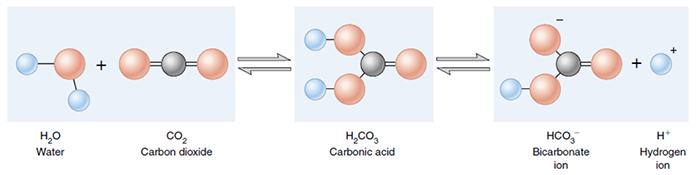
รูปที่ 2.20 การสร้างสารบัฟเฟอร์: คาร์บอนไดออกไซด์และน้ำทำปฏิกิริยาเกิดเป็นกรดคาร์บอนิก (H2CO3) ซึ่งสามารถแยกตัวในน้ำเพื่อปล่อยไอออน H⁺ ส่งผลให้เครื่องดื่มที่มีคาร์บอเนตมีความเป็นกรด และสร้างมหาสมุทรในยุคเริ่มต้นของโลกที่อุดมด้วยคาร์บอนซึ่งเอื้อต่อการเกิดสิ่งมีชีวิต
Figure 2.20 Buffer formation. Carbon dioxide and water combine chemically to form carbonic acid (H2CO3). The acid then dissociates in water, freeing H+ ions. This reaction makes carbonated beverages acidic, and produced the carbon-rich early oceans that cradled life.
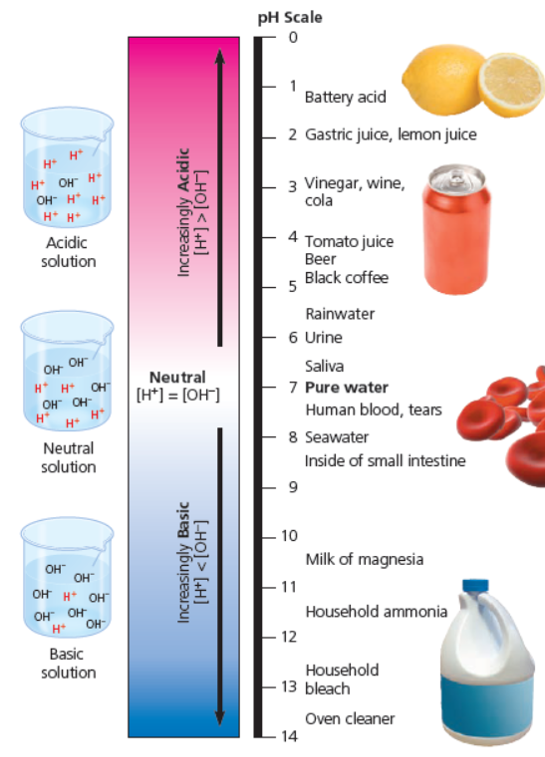
รูปที่ 3.10 แสดงค่าความเป็นกรด-ด่าง (pH) ของสารละลายต่างๆ
Figure 3.10 The pH scale and pH values of some aqueous solutions.
รูปที่ 3.11 แสดงปริมาณ CO2 จากกิจกรรมของมนุษย์ และเส้นทางการดูดซึมเข้าสู่มหาสมุทร
Figure 3.11 Atmospheric CO2 from human activities and its fate in the ocean.





|